Top 7 benefits of going paperless in clinic management (2026 Guide)

Anagha Venugopal
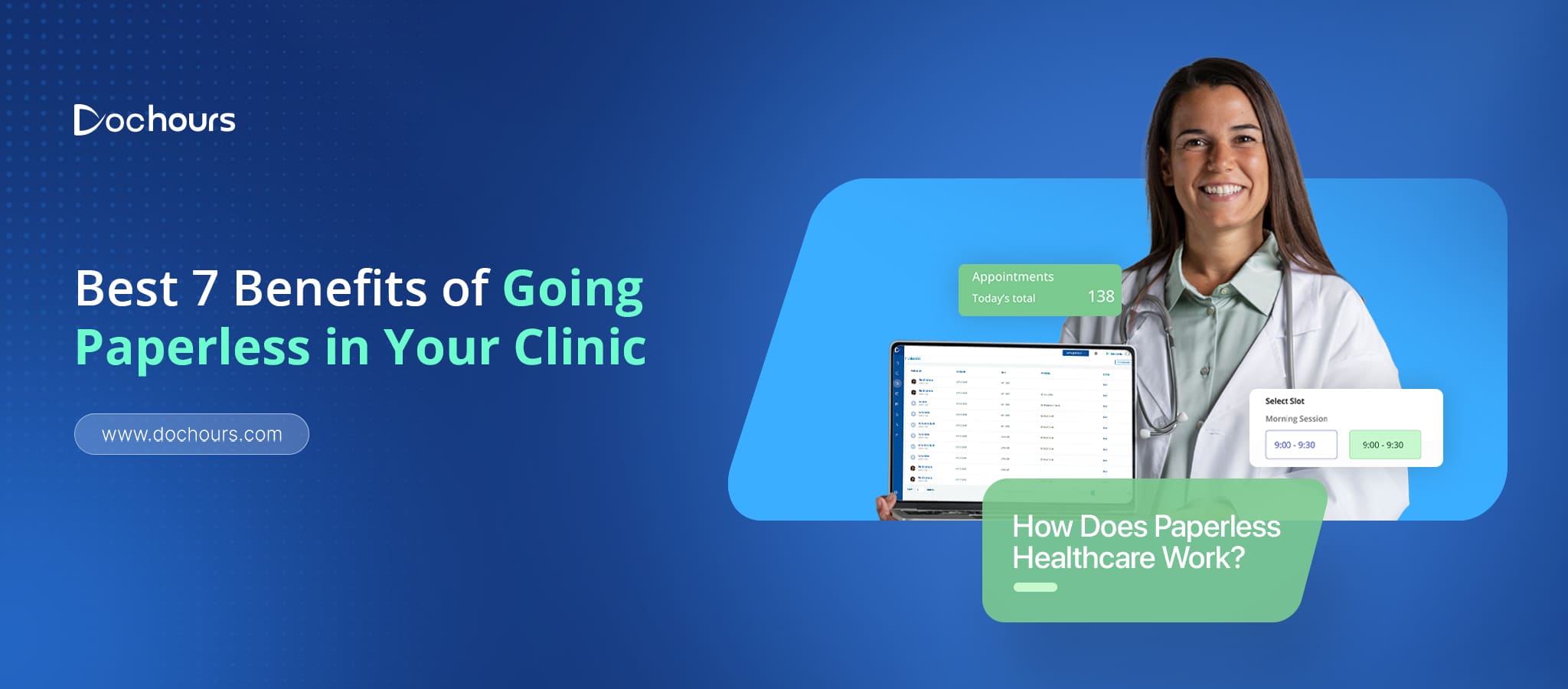
The healthcare industry is undergoing a major digital transformation — and at the heart of it lies paperless healthcare. Clinics are moving away from bulky files, endless paperwork, and misplaced charts, toward smarter, faster, and more secure digital systems that simplify everything from appointments to billing.
But going paperless in clinic management isn’t just about saying goodbye to paper. It’s about reimagining how your clinic runs — creating seamless workflows, improving patient care, and building a more connected, efficient, and secure healthcare experience.
Imagine accessing a patient’s entire history in seconds, processing claims without delays, and spending more time treating patients than managing paperwork. That’s the power of paperless healthcare.
In a world where efficiency, sustainability, and patient satisfaction define success, embracing this shift is no longer optional — it’s essential.
In this guide, we’ll break down what paperless healthcare really means and explore the 7 key benefits of going paperless in clinic management that can transform your practice for good.
What Is Paperless Healthcare?
Paperless healthcare is a modern approach to medical practice where all administrative and clinical operations are managed digitally, completely eliminating the need for paper-based records and processes. Going paperless in healthcare means adopting digital tools and systems that streamline workflows, improve accuracy, and provide superior patient care.
How Does Paperless Healthcare Work?
Tools and Systems That Enable Paperless Healthcare

Several key technologies work together to create effective paperless healthcare solutions:
1. Electronic Medical Records (EMR) – The cornerstone of paperless healthcare, EMR systems digitally store comprehensive patient health information including medical history, diagnoses, medications, treatment plans, immunization dates, allergies, and radiology images. These systems eliminate bulky file cabinets and make patient information instantly accessible to authorized healthcare providers, embodying the core principle of going paperless in healthcare.
2.Digital Appointment Scheduling – Online booking platforms represent a critical component of paperless healthcare, allowing patients to schedule appointments 24/7 through websites or mobile apps. Automated reminders via SMS or email reduce no-shows and help clinics optimize their schedules without manual phone calls or paper appointment books.
3.Cloud-Based Billing & Invoicing – Going paperless in clinic management requires robust financial systems. Digital billing platforms ensure accurate, real-time financial tracking, automatically generating invoices, processing insurance claims, tracking payments, and providing detailed financial reports—all while maintaining complete audit trails without paper receipts or ledgers.
4,Secure Data Storage & Compliance Tools – Paperless healthcare demands enterprise-grade security. Advanced encryption and access controls protect patient information while meeting HIPAA, GDPR, and other regulatory standards. Cloud storage ensures data is backed up automatically and can be recovered in emergencies, providing protection that paper records simply cannot match.
5.Patient Portals & Communication Systems – These platforms are essential for modern paperless healthcare, facilitating direct engagement between patients and providers. Patients can access their health records, view test results, request prescription refills, and communicate with their doctors securely—improving patient satisfaction while reducing administrative workload.
Implementing these tools transforms a traditional clinic into a fully functional paperless healthcare facility, making it easier to manage operations while enhancing overall care quality and operational efficiency.
Why Going Paperless in Healthcare Matters in 2026
Top 7 Benefits of Going Paperless in Your Clinic
1. Cost Savings & Reduced Operational Expenses
The return on investment for going paperless in clinic management typically occurs within the first year, with ongoing savings accumulating indefinitely. Some industry analyses suggest that for a medium-sized clinic, annual savings could fall in the $20,000–$50,000 range, depending on clinic size, scope of digitisation and local cost structure.
Many clinics spend thousands annually on paper, toner, printer upkeep, and storage—costs that disappear with paperless healthcare. Faster, more accurate insurance processing improves cash flow, while digital recordkeeping eliminates expenses tied to physical storage and off-site archiving.
By going paperless in clinic management, staff no longer waste hours filing or retrieving records. What once took minutes per patient now takes seconds, freeing time for patient care and coordination. The result: lower costs, higher efficiency, and a more productive clinic.
2. Improved Data Accuracy & Error Reduction
Medical errors from illegible handwriting, transcription mistakes, or lost data pose serious risks to patient safety. Going paperless in healthcare eliminates these risks through structured data entry, validation checks, and automated alerts that paper systems can’t offer. Fields like drop-down menus and automated allergy/drug checks ensure medications, dosages, and diagnoses are recorded correctly.
Paperless healthcare systems also make historical results instantly searchable—studies indicate reductions in duplicate tests of around 20-30% when electronic systems and alerts are implemented. The overall impact of going paperless in clinic management is improved patient outcomes, lower liability risk, and stronger trust between patients and providers.
3. Faster Workflow & Efficiency
Speed and efficiency are the most visible benefits of going paperless in healthcare. Every process—from check-in to billing—becomes faster and smoother, enabling clinics to serve more patients without adding staff.
Studies show that nurses spend far less time on administrative tasks after adopting EHRs, proving how paperless healthcare streamlines workflows.
Patient check-in drops from 10–15 minutes of manual form-filling to a quick 2–3 minute digital self-check-in via tablet or portal. Records are instantly retrievable, and multiple users can access and update data simultaneously.
With templates, voice-to-text, and smart tools, documentation becomes faster, allowing providers to focus on patients rather than paperwork. Billing and insurance claims are automated, errors are reduced, and communication between departments happens in real time—making paperless clinic management the key to efficient, modern healthcare.
4. Better Patient Experience & Engagement
Patient expectations have evolved dramatically, and going paperless in healthcare directly addresses these modern expectations. Just as consumers expect seamless digital experiences in banking, shopping, and entertainment, they now demand the same from their healthcare providers. Paperless healthcare delivers these expectations in ways that paper-based systems simply cannot match.
One observational study found that direct patient-care time rose from 31% to 44% after EHR implementation — a clear indicator that paperless systems can boost patient engagement.
5. Enhanced Security & Data Compliance
Contrary to popular belief, paperless healthcare systems are far more secure than paper files when implemented correctly. Going paperless in clinic management adds multiple layers of digital protection that traditional records simply can’t match.
With access controls and role-based permissions, only authorized personnel can view or edit patient data, while detailed audit logs track every action. Encryption secures information both in transit and at rest—something paper records can never guarantee.
Automatic backups and disaster recovery features ensure business continuity even after unexpected incidents. Compliance with HIPAA, GDPR, and local data privacy laws becomes far easier within a paperless healthcare framework.
These systems can also detect unauthorized access attempts, block threats in real time, and alert administrators instantly. Consent tracking and secure data sharing further strengthen compliance—making going paperless in healthcare the smarter, safer way to manage patient information.
6. Easy Access & Remote Workability
7. Sustainability & Environmental Impact
Going paperless in healthcare isn’t just about efficiency — it’s about sustainability. By replacing prescriptions, reports, and billing slips with digital records, clinics can dramatically cut paper waste and their overall carbon footprint.
A standout example is KLE Dr. Prabhakar Kore Hospital in Karnataka, which went fully paperless, saving 12.5 million pages and nearly 1,500 trees each year—proving that sustainability and efficiency can go hand in hand.
Paperless healthcare reduces printing, energy use, and waste, creating a cleaner, greener way to operate. It also strengthens a clinic’s reputation, as patients increasingly value eco-conscious providers. And with future regulations emphasizing environmental responsibility, clinics already using paperless healthcare systems will find it easier to stay compliant while others rush to adapt.
How Dochours Helps You Go Paperless
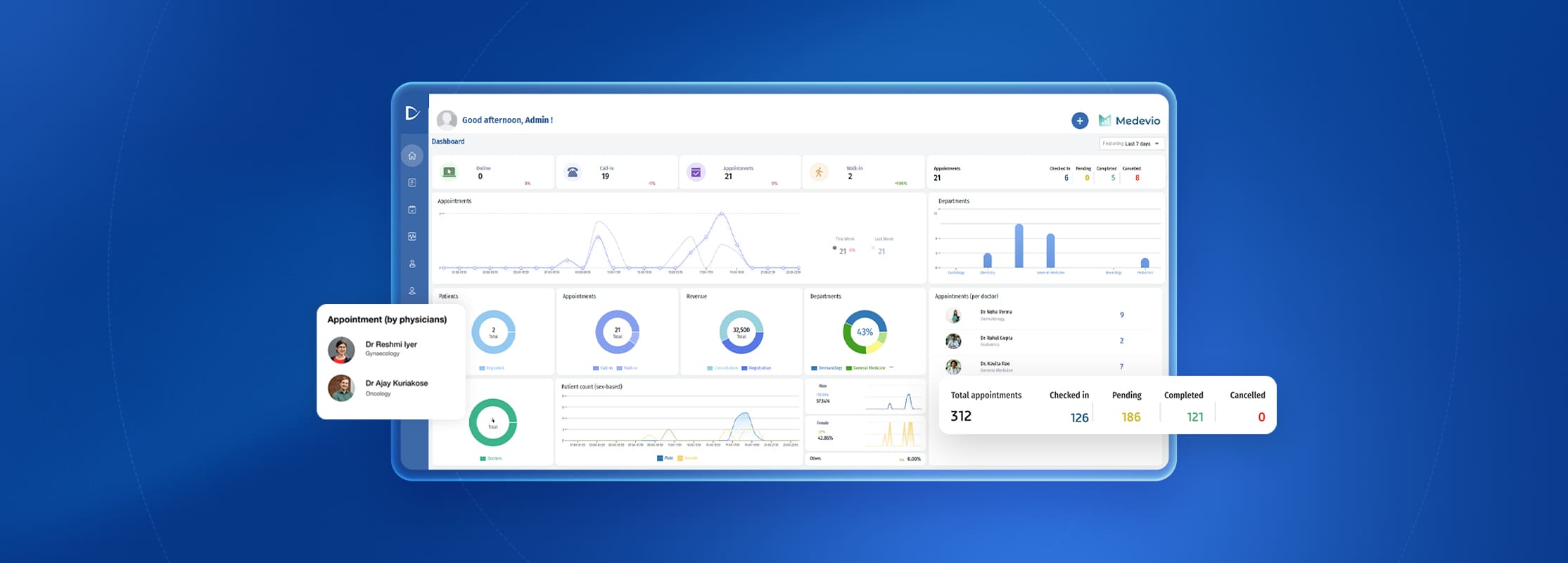
Transitioning to paperless healthcare can feel daunting, but Dochours makes it effortless with an all-in-one digital clinic management solution built for Indian clinics embracing paperless operations.
Dochours centralizes every aspect of going paperless in clinic management—from digital patient registration and complete medical history documentation to treatment plans and e-prescriptions—within one secure platform.
Smart scheduling enables online booking, automated reminders, and real-time updates that reduce no-shows and improve patient flow. Integrated billing automates invoices, claim processing, and financial reporting, ensuring transparency and compliance in your paperless healthcare environment.
With cloud-based access, you can manage your clinic from anywhere—review records, collaborate with specialists, or work across locations—while maintaining top-tier security. With full implementation support—encompassing training, data migration, and ongoing assistance—the Dochours team ensures a smooth and confident transition toward paperless healthcare.
Conclusion
The move to paperless healthcare is no longer about if—it’s about when. The advantages are undeniable: lower costs, greater efficiency, stronger security, and a better patient experience. In 2026 and beyond, going paperless in clinic management isn’t just smart—it’s essential for clinics that want to stay competitive and deliver quality care.
Embracing paperless healthcare shows your commitment to efficiency, sustainability, and innovation. With solutions like Dochours, clinics of any size can transition smoothly, scale easily, and future-proof their operations in a fully digital, patient-centered world.