



AI in Healthcare: Real-World Applications, Benefits, and Challenges in 2026

Anagha Venugopal
Artificial Intelligence (AI) is transforming many areas of our lives, and healthcare is no exception. While AI’s rollout in healthcare might feel slower than in some other fields, its impact is already clear and growing every day. AI isn’t just a futuristic idea anymore — it’s actively helping doctors and healthcare teams do their work better right now.
From analyzing medical images faster to speeding up the search for new drugs, AI is shaking up everything from how diseases are diagnosed to how treatments are tailored to each patient. So, what exactly is AI in healthcare, and how is it making a difference? This blog breaks down the essentials with real-life AI in medicine examples, talks about challenges, and looks at what’s coming next.
What Is AI in Healthcare and How Does It Work?
Artificial Intelligence (AI) in healthcare refers to computer systems and algorithms designed to simulate human intelligence and assist medical professionals in delivering better care. By analyzing vast amounts of medical data—from patient records to medical images—AI helps improve diagnoses, personalize treatment plans, and streamline healthcare operations.
Some of the main types of AI technologies in medicine include:
- Machine Learning (ML): This enables algorithms to learn from healthcare data and improve their accuracy over time, helping predict patient outcomes, recognize disease patterns, and support clinical decisions.
- Natural Language Processing (NLP): NLP allows computers to understand and analyze unstructured medical text such as doctors’ notes and research papers, making this information more accessible and actionable.
- Deep Learning: A specialized form of machine learning that excels in recognizing complex patterns in medical images and genomic data, aiding radiology and pathology diagnostics.
AI-powered diagnostic models have demonstrated accuracy rates as high as 95% in detecting certain cancers using medical imaging, often outperforming traditional assessments by human experts.
Applications and real-world examples of AI in healthcare
1. Faster, Smarter Diagnoses

AI algorithms excel at analyzing medical images such as X-rays, MRIs, and CT scans to detect subtle anomalies that might escape the human eye. Generative AI models can be trained on vast images and medical records to identify disease patterns. AI can automatically segment and label structures such as tumours in medical images. This can reduce the time and effort required by human healthcare providers. Ultimately, it leads to earlier and more accurate diagnoses of conditions like cancer, diabetic retinopathy, and cardiovascular diseases.
Example
The AI system called gastroAI-model G helps doctors find possible issues during gastroscopy in real-time, flagging areas instantly.
2. Speeding Up Drug Discovery
By analyzing the structures of existing effective drugs and testing different versions on a computer, AI can generate potential new drug candidates much faster than traditional, labour-intensive methods. This approach saves time and money and can even help discover drugs that scientists might overlook. AI can also predict the efficacy and safety profiles of new drugs, a crucial step in the drug development process.
AI can also be used to identify drug-drug interactions that occur when several drugs are administered to the same patient. AI and machine learning algorithms can also predict the efficacy and toxicity of drug compounds by identifying patterns and trends that researchers might not notice.
Example
AI company Benevolent AI found that a rheumatoid arthritis drug, baricitinib, could also help COVID-19 patients, leading to quick FDA approval.
3. Personalized Treatments
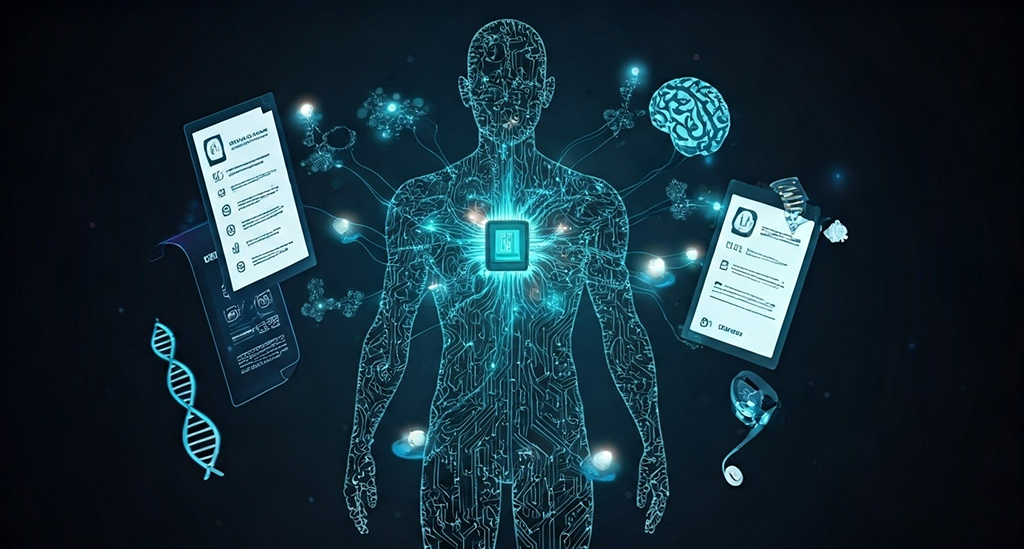
Instead of the commonly followed one-size-fits-all approach, precision medicine provides tailored treatment plans for every individual. This approach involves integrating data from different sources, such as immunological profiles, genetic information, and health records. The use of AI in healthcare simplifies the analysis of such large and complex data sets.
By analyzing genomic, lifestyle, and medical history data, AI enables highly personalized treatment plans. This allows for more precise and effective interventions, leading to better patient outcomes.
Example
Sophia Genetics’ SOPHiA DDM platform speeds up genome sequencing so doctors can tailor therapies to the patient’s exact condition.
4. Predicting and Managing Disease Outbreaks
The rapid global spread of COVID-19 underscored the limitations of conventional public health strategies, which faced immense strain in areas like contact tracing, surveillance, and forecasting. Nevertheless, the pandemic spurred the development of numerous technological solutions, with artificial intelligence (AI) emerging as a crucial tool. AI can analyze large datasets to identify patterns and predict the likelihood of disease outbreaks, allowing public health officials to take timely preventive measures.
Overcoming the limitations of traditional observational methods, AI’s ability to process complex and unstructured data from medical records, social media, genomics, and environmental sources through machine learning and deep learning allows for comprehensive predictive analytics.
Example
- BlueDot an AI-powered startup, detected signs of COVID-19 days before the World Health Organization’s official warnings.
- EPIWATCH® is an AI-powered global health intelligence system that analyzes open-source data in multiple languages to provide early warnings of potential pandemics. It detects unusual disease patterns faster than traditional methods, enabling quicker outbreak identification and timely response.
5. Keeping Patients Safe at Home
AI-powered Remote Patient Monitoring (RPM) enables healthcare providers to track patients’ vital signs and medication adherence in real time, allowing early detection of health issues and timely interventions. This continuous monitoring improves management of chronic diseases, reduces hospitalizations, and empowers patients to actively participate in their care. Ultimately, AI-driven RPM lowers hospital readmissions and emergency visits, cutting healthcare costs and improving outcomes for high-risk patients.
Example
Biobeat’s AI-powered remote patient monitoring platform includes wrist and chest-worn devices that continuously and accurately measure 13 vital signs in real time, such as blood pressure, oxygen saturation, pulse rate, and respiratory rate. The data is transmitted wirelessly to a secure cloud-based app where AI-driven analytics provide actionable insights and early warnings to healthcare providers, enabling timely interventions and personalized
Challenges of Using AI in Healthcare
While the potential of AI in healthcare is undeniable, implementing it widely isn’t without its challenges. Bringing AI into the complex, highly regulated world of medicine requires overcoming several obstacles. This section explores the main barriers slowing AI’s seamless integration in healthcare, and highlights innovative solutions that can help unlock AI’s full potential—empowering healthcare professionals and ultimately improving patient care and outcomes.
1. Data Privacy and Security
Large Language Models(LLMs) might inadvertently memorize the data sets on which they are trained. These data sets can be accessed using special queries. This could reveal sensitive personal information and other confidential information, such as passwords, leading to privacy risks and security breaches.
Solution
Traditional de-identification techniques such as data masking and suppressing can remove personally identifiable information (PII) and protected health information (PHI), rendering them obscure.AI powered data anonymization such as ENCOG can be used to identify PHI from medical images and text and remove them.Data privacy preserving techniques such as federated learning, differential privacy and homomorphic encryption can safeguard data during analysis and model training.
2. Data Quality and Interoperability
AI algorithms rely on high-quality, standardized data. The fragmented nature of healthcare data, with inconsistencies in formats and a lack of interoperability between systems, poses a significant challenge. Data entered into EHR’s manually are often inaccurate,inconsistent. Variations of the same name can often lead to data entry errors resulting in duplication of records.
When AI models are trained using such erroneous data, it can skew the analysis and impact the efficacy of the model. Healthcare data is often siloed due to fragmented healthcare systems. This prevents AI models from having a comprehensive view of patients’ medical history and fails to provide holistic insights in cases that require cross-organisational collaboration.
Similarly, the lack of a standardized coding system and data format hinders data exchange between AI applications that are trained on different coding systems. Such poor data quality and interoperability issues can impact drug discovery and personalised treatment, and also result in increased costs.
Solution
Continuous data validation, cleansing, and adoption of universal standards such as HL7 FHIR, DICOM, and ICD-10 enable better data integration and AI analysis.
3. Bias in Algorithms
AI models trained on biased data can perpetuate and even amplify existing health disparities. Ensuring fairness and equity in AI algorithms is crucial.
There are multiple examples where AI models trained on biased data sets have generated inequitable outcomes that have eroded the trust of patients. AI algorithms for diagnosing skin cancer, trained mainly on images of lighter skin tones, have demonstrated significantly lower accuracy on darker skin, potentially delaying diagnosis and worsening outcomes for these patients.
In cardiology, models predicting heart attacks trained primarily on male data may fail to accurately identify risks in women who often present with different symptoms. These instances of bias not only perpetuate existing health disparities but also undermine the trust of both patients and healthcare providers in AI systems, hindering their widespread adoption despite their potential benefits.
Solution
Ensure the use of data that reflects the diversity of the population. Deploy techniques that mitigate inherent data biases before using data to train models. Techniques like re-weighting data points to give more importance to underrepresented groups or transforming features to reduce discriminatory power. Incorporating multi disciplinary teams in the development of AI, conducting regular audits to detect bias in data and establishing clear ethical guidelines can ensure the development of a fair and unbiased AI in healthcare.
4. Regulatory Hurdles
AI regulations in healthcare are evolving, with unclear accountability for AI-driven errors. Frameworks like the FDA’s Good Machine Learning Practice (GMLP) guide safe AI development. Collaboration among policymakers, clinicians, developers, and patients is essential for clear, global regulatory standards.
Solution
In 2021, the FDA, Health Canada, and MHRA introduced 10 principles of Good Machine Learning Practice (GMLP) to ensure AI medical devices are safe and effective. These guidelines help speed up patient access and improve diagnoses. Collaboration and education among stakeholders, plus global regulatory alignment, are vital for the safe and broad use of AI in healthcare
5. Integration with Existing Systems
Integrating AI into healthcare is challenging because many existing systems, like EHRs, PACS, and LIS, use outdated technologies and incompatible data formats. These legacy systems often lack the computing power for real-time AI processing and require costly, complex upgrades. The absence of standard protocols further complicates AI integration, causing inconsistent implementation and slowing AI adoption across healthcare organizations.
Solution
Cloud-based platforms like AWS, Azure, and Google Cloud can handle the computational demands of AI without requiring significant on-premises hardware upgrades.Switching to cloud-based EHRs and healthcare applications enables better interoperability and easier integration with AI solutions.
Enterprise Service Buses (ESB) are software architectures that allow real-time data exchange between disparate applications. Similarly, API management platforms can facilitate smooth connections between AI systems and existing legacy systems. Adopting an API-first architecture when developing new healthcare IT systems can ensure easy integration with AI platforms.
6. Lack of Trust and Acceptance

Some healthcare professionals and patients hesitate to adopt AI due to concerns about transparency, accountability, and losing the human touch in care. AI’s deep learning models are often hard to interpret, leading to skepticism and trust issues. Unclear responsibility for AI errors also causes hesitation, alongside worries about data privacy, bias, and security risks. Over-reliance on AI may reduce essential human empathy and communication in healthcare.
Solution
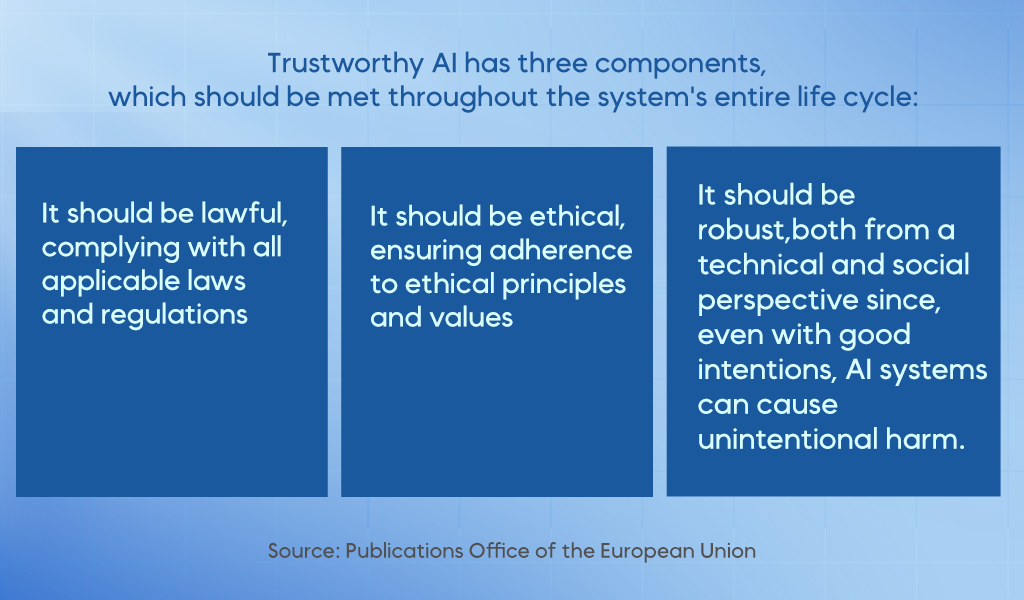
To gain the trust of patients and caregivers, AI needs to be trustworthy. To ensure AI trustworthiness in healthcare, clear guidelines must define the conditions for trustworthy AI, focusing on improving patient care rather than just efficiency. Organizations should protect patient data with informed consent, encryption, anonymization, and comply with HIPAA and GDPR. Accountability must be clearly assigned among doctors, developers, and healthcare providers. Effective collaboration with patients and stakeholders ensures AI remains fair, equitable, and effective.
7. Cost of Implementation
Developing and deploying AI in healthcare is costly, requiring major investments in infrastructure, skilled talent, and ongoing maintenance. Initial infrastructure—including high-performance hardware, specialized software, and secure data storage—can be expensive. Hiring experts like data scientists and engineers adds to costs, as does extensive data preparation. Integrating AI with legacy healthcare systems often needs complex, costly custom work. Regulatory compliance, certifications, and liability management further increase expenses. Continuous updates and scalability demands also require ongoing financial commitment, making the total cost a significant consideration for healthcare organizations.
Solution
Using cloud-based AI solutions can help eliminate the cost involved in setting up infrastructure and allows flexible pay-as-you-go pricing where users are charged only based on usage. Relying on open-source AI solutions and focusing on ROI-based investments can also help reduce costs substantially. Outsourcing AI development to third-party providers can significantly reduce costs related to hiring, training and maintaining technology. Instead of implementing AI in a single phase, adopting a phased approach can considerably reduce costs. A phased approach can allow organizations to evaluate their needs and refine the AI model before implementation.
By addressing these challenges thoughtfully and strategically, the healthcare industry can rely on the transformative power of AI to improve patient care, enhance efficiency, and drive innovation.
Conclusion
AI in healthcare is changing the game—helping detect diseases early, personalize treatments, and make healthcare smarter and more efficient. While challenges like data privacy, ethics, and regulations exist, solutions are evolving quickly. For healthcare providers, embracing AI means embracing a future that’s more responsive and patient-centered. Success depends on responsible innovation, teamwork across disciplines, and building trust every step of the way. Together, these efforts ensure AI enhances, not replaces, human care, making healthcare more effective and compassionate for everyone.
Frequently Asked Questions (FAQs)
1. What is AI in healthcare?
AI in healthcare refers to the use of artificial intelligence technologies—such as machine learning, natural language processing, and computer vision—to improve diagnosis, treatment planning, patient monitoring, and operational efficiency in medical settings.
2. How is AI used in healthcare today?
AI in healthcare is currently used for early disease detection, medical imaging analysis, drug discovery, predictive analytics, and automating administrative tasks like documentation and billing.
3. What are the benefits of AI in healthcare?
Key benefits of AI in healthcare include:
- Faster Diagnosis: AI analyzes medical data rapidly, enabling quicker and more accurate diagnoses.
- Improved Treatment Accuracy: AI supports personalized treatment plans tailored to individual patient data.
- Reduced Human Error: Automating routine tasks and data analysis minimizes mistakes.
- Personalized Patient Care: AI uses genetic, lifestyle, and health history data to customize therapies.
- Enhanced Operational Efficiency: AI streamlines administrative tasks, lowering costs and improving healthcare workflows.
- Remote Monitoring: Wearables and AI-powered tools enable continuous patient health tracking outside hospitals.
- Predictive Analytics: AI identifies high-risk patients early, enabling preventive care and reducing complications.
- Better Clinical Decision Support: AI provides real-time, evidence-based recommendations to clinicians, improving care quality.
4. What challenges does AI in healthcare face?
- Data Privacy Concerns: Protecting sensitive patient data from misuse and breaches is critical.
- Algorithmic Bias: AI can perpetuate existing inequalities if trained on biased data.
- Regulatory Uncertainty: Evolving rules make compliance and approval unclear and complex.
- Trust and Adoption: Healthcare professionals and patients may hesitate due to lack of transparency and understanding.
- Integration Issues: Legacy healthcare systems often struggle to seamlessly adopt AI technologies.
- Accountability: Unclear responsibility for AI errors creates legal and ethical dilemmas.
- Cost and Resources: High expenses for development, deployment, and maintenance limit widespread use.
5. What is the future of AI in healthcare?
The future of AI in healthcare will bring widespread adoption across clinical workflows, personalized treatments, and real-time patient monitoring. AI will become more ethical and explainable, building trust while improving outcomes. It will automate entire care episodes, increasing efficiency and accuracy. Collaboration among healthcare professionals, researchers, and policymakers will ensure responsible innovation, making healthcare more adaptive, precise, and compassionate. Overall, AI will empower providers and enhance patient experiences, shaping a smarter, more patient-centered healthcare system.

