



Top 10 healthcare technology trends of 2025

Anagha Venugopal
Healthcare technology trends in 2025 are redefining the way hospitals, clinics, and startups deliver care. With rapid digital transformation, health tech trends are no longer optional—they are critical for improving patient outcomes, reducing costs, and enhancing operational efficiency.
Technology is transforming healthcare on multiple fronts. Artificial intelligence and machine learning are enabling faster, more accurate diagnoses. Cloud-based solutions are streamlining patient data management while ensuring compliance and security. Wearable devices and remote monitoring are empowering patients to actively participate in their own health journeys. Meanwhile, telemedicine platforms continue to break barriers of distance, making healthcare accessible anytime, anywhere.
For healthcare providers, adopting these future trends in healthcare technology means reducing administrative burden, lowering error rates, and providing personalized treatment at scale. For patients, it means faster access to care, improved convenience, and better outcomes.
In 2025, staying updated on these healthcare technology trends is not just about keeping pace—it’s about gaining a competitive edge in a patient-centric world.
This article explores the Top 10 Healthcare Technology Trends of 2025, offering insights into what’s next for the industry and how organizations can prepare for the future.
The Top 10 Healthcare Technology Trends Shaping 2025
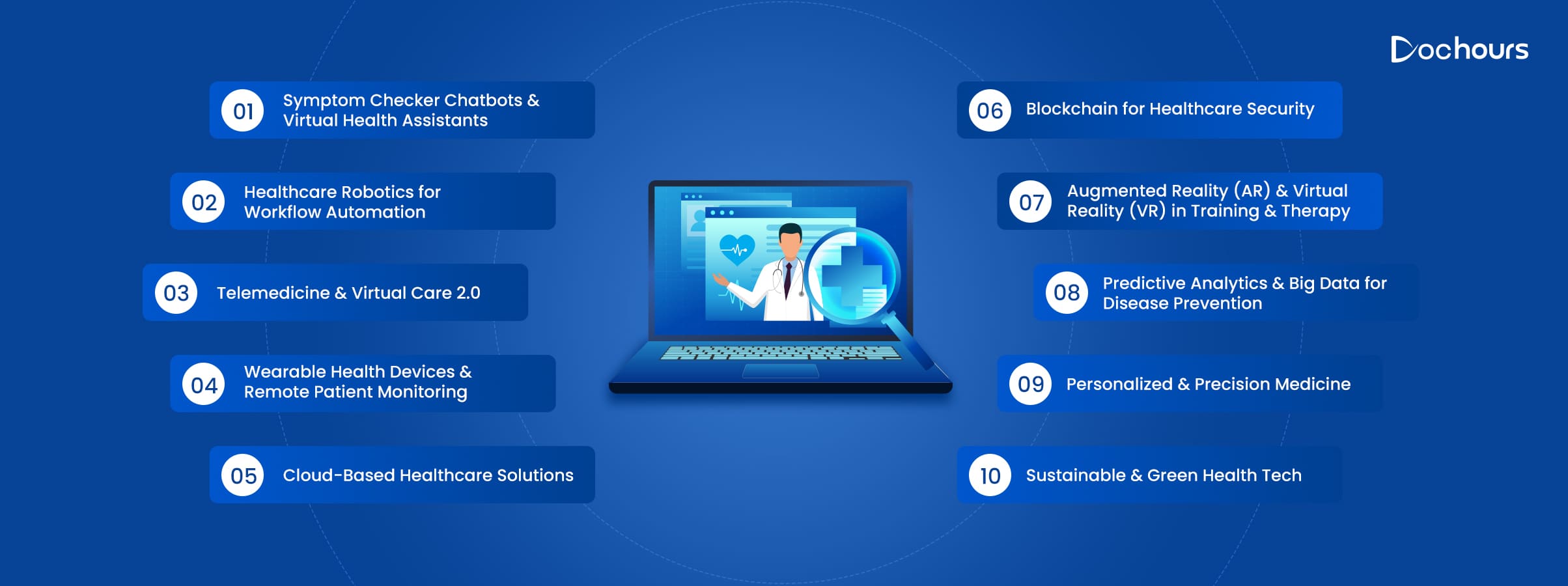
1. Symptom Checker Chatbots & Virtual Health Assistants
Virtual health assistants are revolutionizing patient engagement in 2025, extending far beyond simple symptom checking. These AI-powered tools provide 24/7 healthcare support through personalized interactions, automated patient management, and comprehensive care coordination.
Modern virtual assistants can guide patients through billing processes, manage appointment scheduling with real-time updates, provide secure access to test results, and offer personalized medical reminders. They integrate seamlessly with EHR systems and patient portals, creating streamlined healthcare experiences.
These intelligent systems excel at handling routine administrative tasks while maintaining meaningful patient interactions. However, healthcare organizations must implement them carefully to ensure accurate information delivery and appropriate escalation to human providers when complex medical decisions are required. As adoption continues to grow, virtual health assistants are set to become one of the most practical healthcare technology trends driving efficiency and better patient engagement in 2025.
2. Healthcare Robotics for Workflow Automation
Healthcare robotics is experiencing unprecedented growth in 2025, with organizations investing substantially in AI-driven systems designed to optimize workflows and address critical staffing shortages. As one of the key healthcare technology trends shaping the future, these advanced robots augment healthcare professionals rather than replace them, handling routine tasks so staff can focus on complex patient care.
Modern healthcare robotics spans facility hygiene management, surgical assistance, medication dispensing, and patient care support. These systems operate continuously with high precision, maintaining consistent performance during peak demand periods while reducing human error.
Successful implementation requires careful integration with existing workflows and comprehensive staff training. The most effective approach treats robotic systems as collaborative tools that enhance human capabilities while preserving the essential human elements of compassionate healthcare delivery.
3. Telemedicine & Virtual Care 2.0
The evolution of telemedicine has entered a new phase with hybrid care models that seamlessly blend in-person and virtual consultations. Remote monitoring capabilities have expanded beyond basic video calls to include comprehensive health tracking and real-time patient data analysis. Virtual clinics are becoming more sophisticated, offering specialized care that was previously only available in traditional healthcare settings.
This trend addresses the growing demand for accessible healthcare, particularly in underserved areas, while maintaining the quality and personal touch that patients expect.
4. Wearable Health Devices & Remote Patient Monitoring
Smartwatches, biosensors, and IoT devices are revolutionizing how we track and monitor health in real-time. These devices go beyond counting steps, now monitoring heart rhythms, blood oxygen levels, sleep patterns, and even detecting early signs of illness. The data collected provides healthcare providers with continuous insights into patient health, enabling proactive interventions.
The integration of these devices with electronic health records creates a comprehensive picture of patient health that was previously impossible to achieve with periodic clinic visits alone.
4. Cloud-Based Healthcare Solutions
Scalable Electronic Health Records (EHR) and Electronic Medical Records (EMR) systems are moving to the cloud, providing healthcare organizations with flexible, cost-effective solutions. Cloud-based clinic management systems offer improved accessibility, enhanced security, and seamless patient data sharing across different healthcare providers and facilities.
Cloud-based clinic management software, such as Dochours, offers improved accessibility, enhanced security, and seamless patient data sharing across various healthcare providers and facilities. This shift enables better care coordination and reduces the administrative burden on healthcare workers while enhancing the overall patient experience. This shift enables better care coordination and reduces the administrative burden on healthcare workers while ensuring compliance with healthcare regulations and data protection standards.
6. Blockchain for Healthcare Security
As healthcare data becomes increasingly digital, blockchain technology provides a secure, transparent way to manage patient records and prevent fraud. This technology ensures data integrity, enables secure sharing of medical information between authorized parties, and gives patients greater control over their health data.
Blockchain’s immutable ledger system is particularly valuable for maintaining accurate medical records and ensuring the authenticity of pharmaceutical supply chains.
7. Personalized & Precision Medicine
The combination of genomics, AI-driven treatment plans, and individualized therapies is making personalized medicine a reality. Healthcare providers can now tailor treatments based on a patient’s genetic makeup, lifestyle factors, and specific health conditions. This approach leads to more effective treatments with fewer side effects.
Precision medicine is particularly transformative in oncology, where genetic profiling of tumors can guide targeted therapy decisions that significantly improve patient outcomes.
8. Augmented Reality (AR) & Virtual Reality (VR) in Training & Therapy
Medical education and training are being revolutionized through simulation-based learning using AR and VR technologies. These immersive experiences allow healthcare professionals to practice complex procedures in safe, controlled environments. For patients, VR therapy is showing promising results in pain management, mental health treatment, and rehabilitation.
The ability to simulate rare medical conditions and emergency scenarios through VR is invaluable for training healthcare professionals without putting real patients at risk.
9. Predictive Analytics & Big Data for Disease Prevention
Healthcare organizations are leveraging vast amounts of medical data to identify patterns and correlations that enable proactive disease prevention. As one of the most impactful healthcare technology trends of 2025, predictive analytics allows providers to process comprehensive datasets including patient demographics, environmental factors, and clinical outcomes to predict health risks before conditions become critical.
Modern predictive analytics applications extend beyond individual care to population health management, identifying disease outbreak patterns and optimizing public health interventions. EHR systems now incorporate advanced analytics modules that visualize trends, identify at-risk patients, and recommend targeted prevention strategies.
The power of predictive analytics lies in shifting healthcare from reactive treatment to proactive prevention. By identifying patients at risk for chronic diseases, healthcare providers can implement early interventions that improve outcomes while significantly reducing long-term costs.
10. Sustainable & Green Health Tech
Environmental consciousness is driving the development of eco-friendly medical devices and energy-efficient hospital systems. Sustainable healthcare technology reduces the environmental impact of medical operations while often providing cost savings through improved efficiency.
This trend includes biodegradable medical supplies, energy-efficient imaging equipment, and sustainable building designs for healthcare facilities.
How Healthcare Technology Trends Work Together to Reshape Patient Care
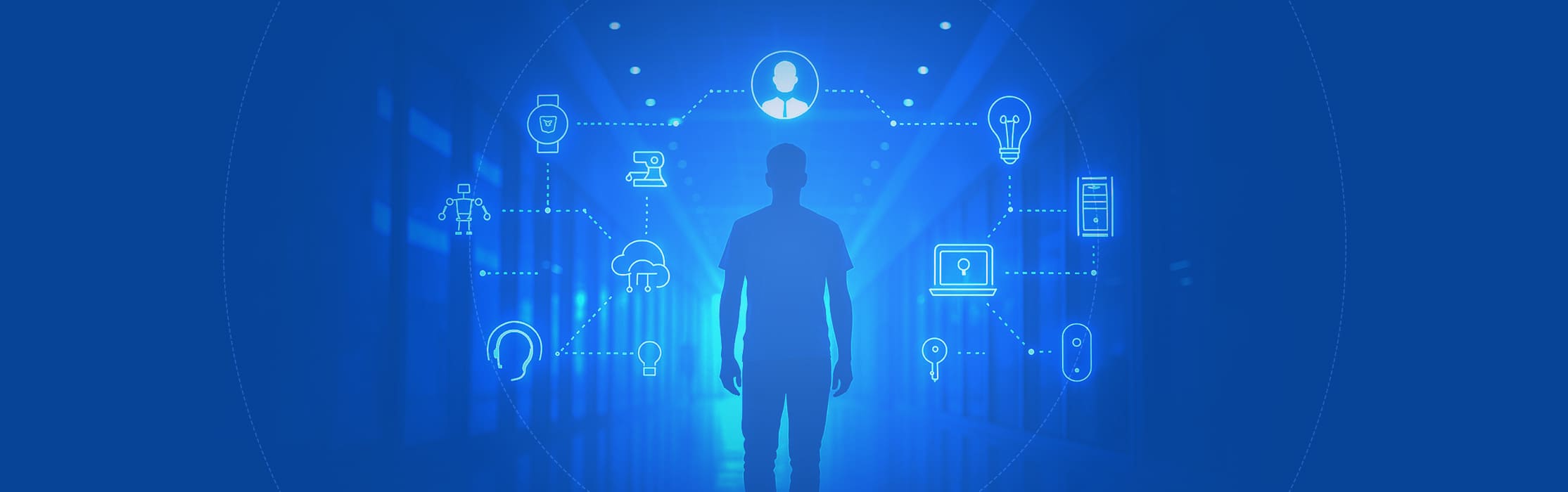
While each healthcare technology trend offers significant value on its own, their true power emerges when they work together as an integrated ecosystem. This convergence creates a more connected, efficient, and patient-centered healthcare system.
The Power of Integration
Consider how these technologies interconnect: A wearable device continuously monitors a patient’s vital signs and feeds this real-time data to an AI-powered EMR system stored in the cloud. When anomalies are detected, predictive analytics can alert healthcare providers, who can then conduct a telemedicine consultation to assess the situation. If intervention is needed, the comprehensive patient data is instantly available to inform treatment decisions.
Cloud platforms serve as the backbone, securely sharing patient data across different doctors, specialists, and hospitals. When surgical intervention is required, robotics and AI systems can assist in precision procedures with instant access to the patient’s complete medical history and real-time health data.
Benefits of Technological Convergence
This integrated approach delivers numerous advantages:
Reduced Medical Errors: When systems communicate seamlessly, the risk of information gaps and medical errors decreases significantly.
Faster Decision-Making: Healthcare providers have access to comprehensive, real-time patient data, enabling quicker and more informed decisions.
Personalized Treatment Plans: The combination of genetic data, continuous monitoring, and AI analysis allows for truly individualized care plans.
Patient Empowerment: Patients become active participants in their healthcare journey, with tools and technologies that help them understand and manage their health proactively.
The shift toward digital-first patient engagement is becoming a defining factor in healthcare delivery by 2025, driven by patients who are accustomed to seamless digital experiences in other aspects of their lives and now expect the same level of convenience and accessibility in their healthcare interactions.
Preparing for the Future of Healthcare Technology
As these healthcare technology trends continue to evolve and integrate, healthcare organizations must prepare for a future where digital health solutions are not just supplementary tools but fundamental components of care delivery. Success in 2025 and beyond will depend on embracing these technologies while maintaining the human element that remains at the heart of healthcare.
The convergence of AI, cloud computing, IoT devices, and advanced analytics is creating unprecedented opportunities to improve patient outcomes, reduce costs, and enhance the overall healthcare experience. Organizations that invest in these technologies and focus on integration will be best positioned to thrive in the rapidly evolving healthcare landscape.
The future of healthcare is digital, connected, and patient-centered. By understanding and implementing these top 10 healthcare technology trends, healthcare providers can build more efficient, effective, and compassionate care systems that benefit both patients and providers alike.
Frequently asked questions
- What are the top healthcare technology trends in 2025?
The top healthcare technology trends in 2025 include AI-powered diagnostics, telemedicine, wearable health devices, robotic surgery, cloud-based healthcare platforms, and advanced data security solutions. Together, these innovations are making healthcare more personalized, efficient, and accessible. - Why are health tech trends important for clinics and hospitals?
Health tech trends help providers reduce costs, improve patient outcomes, and streamline operations. For example, digital scheduling reduces no-shows, while AI-assisted tools speed up diagnosis. Clinics adopting these technologies early gain efficiency and patient trust. - How do healthcare technology trends improve patient care?
These technologies create an interconnected care system. Wearables track real-time vitals, EMRs store patient history securely, and telemedicine makes access easier. This integration leads to fewer errors, faster treatment, and more personalized care. - What role do startups and SaaS platforms play in health tech?
Startups and SaaS platforms democratize access to advanced healthcare tools. Instead of investing in costly infrastructure, clinics can use cloud-based solutions like Dochours for digital patient management, online bookings, and automated reminders. - What is the future of healthcare technology?
The future healthcare technology trends point toward predictive and preventive care. By combining AI, data analytics, and cloud platforms, healthcare will shift from treatment-focused to patient-centered, ensuring more proactive and affordable care.

