



How Clinics Use WhatsApp for Healthcare to Improve Patient Communication

Raheem
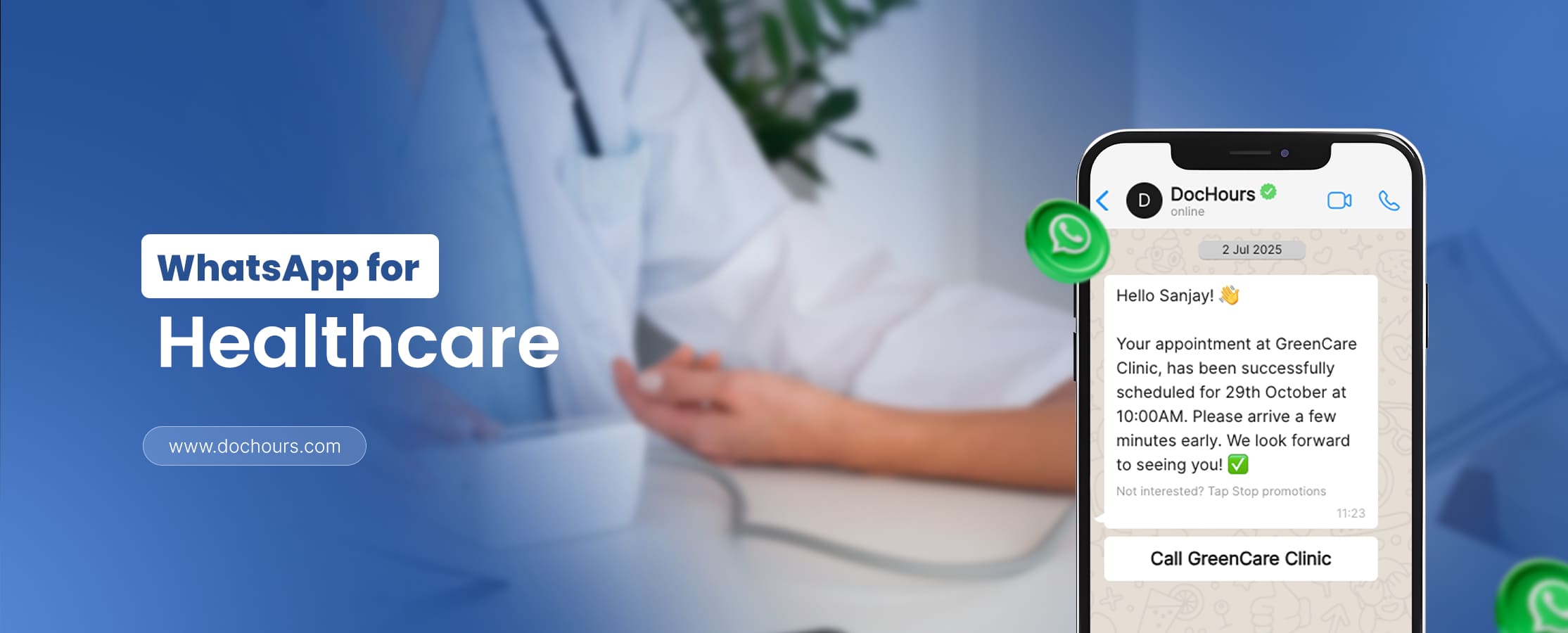
In today’s digital-first world, the way clinics and healthcare providers communicate with patients is evolving fast. Traditional calls and emails are being replaced by instant, personal, and convenient channels — and that’s where WhatsApp for healthcare is making a real difference.
With over 2 billion active users, WhatsApp has become more than just a messaging app — it’s a powerful healthcare communication tool that helps doctors, clinics, and hospitals connect with patients in real time. From appointment scheduling and prescription updates to post-visit follow-ups, it bridges the gap between care and convenience.
By using WhatsApp Business for healthcare, clinics can automate reminders, share lab reports securely, and provide quick responses — all while maintaining patient trust and confidentiality. Whether you’re a single practitioner or a multi-specialty clinic, leveraging WhatsApp can streamline operations and enhance patient engagement like never before.
In this guide, we’ll explore how healthcare professionals use WhatsApp to simplify patient communication, improve satisfaction, and build lasting relationships — all while staying compliant and efficient.
Why Healthcare Professionals Are Adopting WhatsApp Communication
Healthcare is becoming more patient-centric than ever, and speed, accessibility, and personalization now define the quality of care. That’s why many clinics are turning to WhatsApp for healthcare communication — a platform patients already trust and use daily.
Unlike traditional communication channels like phone calls or emails, WhatsApp offers real-time, secure, and familiar interactions. Patients can book appointments, receive updates, and ask quick questions — all within seconds. For healthcare providers, it simplifies workflow, improves response times, and strengthens patient engagement.
As digital healthcare continues to grow, tools like WhatsApp Business for healthcare are not just add-ons but essential parts of modern patient care strategies.
5 Key Benefits of Using WhatsApp for Healthcare Communication:
Wondering how WhatsApp for healthcare can improve clinic-patient communication? Here are some of its major benefits:
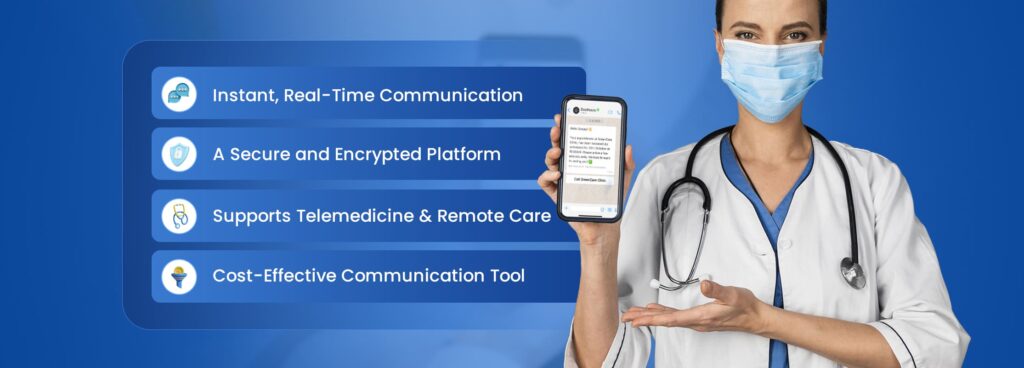
1.Real-Time Patient Communication
WhatsApp enables instant, two-way communication between patients and clinics — from appointment booking and reminders to prescription follow-ups. This quick interaction boosts satisfaction and builds long-term trust.
2. A Secure and Encrypted Platform
With end-to-end encryption, WhatsApp ensures that all patient conversations and shared documents remain private and compliant with healthcare data standards. It’s a safe, reliable way to share sensitive medical information.
3. Supports Teleconsultation and Remote Care
Using WhatsApp Business for healthcare, doctors can conduct video calls, voice calls, and remote consultations, making it easier to care for patients in rural or remote areas.
4. Cost-Effective Communication Tool
No need for costly SMS or phone systems — WhatsApp allows free, global communication and can be integrated into your clinic management software for automated responses, reminders, and marketing broadcasts.
5. Automation with WhatsApp Business API
With the WhatsApp Business API, clinics can automate repetitive tasks like reminders, confirmations, and FAQs — allowing staff to focus on patient care while ensuring no message goes unanswered.
How to implement WhatsApp in healthcare:
Looking to integrate WhatsApp for healthcare into your clinic’s workflow? Here are some key use cases to effectively implement WhatsApp Business for healthcare communication and improve patient engagement.

1. Use WhatsApp as a Communication channel
WhatsApp can act as a medium to streamline the basic operations in providing healthcare from appointment scheduling and reminders to rescheduling or cancellations. Patients can message your clinic anytime, and your team can respond faster without missed calls or long email threads.
Tip: Automate appointment confirmations and reminders using WhatsApp Business API to reduce no-shows.
2. Share Prescriptions and Lab Reports Digitally
Clinics can use WhatsApp to securely send digital prescriptions and lab reports directly to patients. This not only adds convenience but also enhances the efficiency of your patient engagement platform, ensuring patients have instant access to critical information.
Tip: Ensure HIPAA-compliant sharing by using verified business accounts and encrypted message workflows.
3. Automate Post-Visit Follow-ups and Feedback
Following up with patients a few days after their visit via WhatsApp encourages continued care and builds trust. This approach plays a key role in improving patient engagement in healthcare, especially when combined with wellness tips, reminders, or satisfaction surveys.
Tip: Hope you’re feeling better, [Name]. Please let us know how your consultation went
4. Run Health Campaigns and Preventive Care Broadcasts
Use WhatsApp Broadcast to send updates like vaccination drives, seasonal health awareness tips, or new doctor availability. These proactive communications keep your patients engaged even outside of visits.
Tip: Segment your patient list to send relevant updates and increase engagement rates.
5. Integrate WhatsApp with Your Clinic Management Software
To avoid message overload, integrate WhatsApp with tools like Dochours, which centralize all chats, track responses, and ensure every patient interaction is logged and secure. This turns WhatsApp into a complete patient engagement solution, not just a chat app.
Note: Implementing WhatsApp Business in healthcare isn’t just about convenience — it’s about creating smarter, faster, and more patient-friendly communication systems.
Compliance & Data Security in WhatsApp Healthcare Communication
When it comes to healthcare communication, patient data privacy isn’t optional—it’s the foundation of trust. As clinics adopt WhatsApp for faster engagement, one key question often arises: Is WhatsApp HIPAA-compliant or GDPR-compliant for healthcare communication?
Is WhatsApp HIPAA Compliant?
While WhatsApp uses end-to-end encryption, meaning messages and attachments are secure in transit, it is not inherently HIPAA-compliant in its consumer version. HIPAA (Health Insurance Portability and Accountability Act) in the U.S. sets strict rules for storing, transmitting, and accessing patient health information (PHI). To ensure compliance, clinics must use WhatsApp Business API integrated with a secure patient communication platform like Dochours.
This allows:
- Controlled access to messages and files
- Encrypted data storage within clinic systems
- Audit logs and message tracking
- Patient consent management
In short, WhatsApp can be part of a HIPAA-compliant workflow—only when it’s managed through a secure healthcare system that handles encryption and access properly.
What About GDPR?
For clinics in India and other regions handling international patients, GDPR (General Data Protection Regulation) also applies. GDPR focuses on protecting personal data and ensuring transparency about how information is used.
By connecting WhatsApp through a GDPR-ready platform, clinics can:
- Store only necessary data
- Obtain explicit patient consent before messaging
- Provide easy data deletion options on request
This ensures patients remain in control of their information—maintaining both legal compliance and patient confidence.
Challenges and solutions in WhatsApp healthcare communication:
While WhatsApp has transformed how clinics communicate, it also comes with certain limitations if not implemented correctly. Understanding these challenges — and how to overcome them — is crucial for safe, scalable patient communication.
Obstacle 1: Data Privacy & Security Risks
Patient health data shared over standard WhatsApp can be exposed to security threats.
How to Overcome:
Use WhatsApp Business API integrated with a secure healthcare platform that ensures encryption, audit trails, and role-based access.
Obstacle 2: Unstructured Patient Conversations
Without a central system, conversations stay scattered across devices, making it hard to track patient history.
How to Overcome:
Connect WhatsApp with your Clinic Management Software to store every chat, file, and report under the patient’s profile — ensuring complete visibility.
Obstacle 3: Message Overload & Slow Responses
As patient queries increase, manual replies can overwhelm your team.
How to Overcome:
Set up AI-powered chatbots and automated workflows for FAQs, appointment scheduling, and feedback collection to improve response times.
Obstacle 4: Lack of Compliance Awareness
Many clinics use WhatsApp informally without realizing compliance risks.
How to Overcome:
Establish internal policies and staff training on data sharing, consent, and confidentiality to ensure legal compliance (HIPAA / NDHM).
How Dochours Enhances WhatsApp for Healthcare Communication:
As a smart, all-in-one clinic management software, Dochours greatly involves WhatsApp for healthcare and to improve how clinics interact with patients.
From appointment reminders to report sharing, Dochours transforms WhatsApp into a powerful patient engagement tool.
- Automated Appointment Reminders
Dochours smartly pairs itself with WhatsApp’s exemplary communication channel to send reminders to patients who has an appointment coming up. If you have a day with a doctor coming up, Dochours makes sure you don’t miss it at any cost.
- Share Lab Reports, Bills & Diagnoses Instantly
The world is growing more digital by the day, there is no place for paper records anymore. Dochours makes it imperative that all the patient records including lab reports, bills, patient diagnosis are sent to the patient in a PDF format, for easy access and usage to the patient and doctor.
- Integrated, Smarter Communication
With Dochours as your patient communication platform, WhatsApp becomes more than just a messaging app — it becomes a structured, trackable, and secure medium for clinical communication. From scheduling to follow-ups, every interaction is logged and optimized, ensuring faster, smarter, and more personalized patient care.
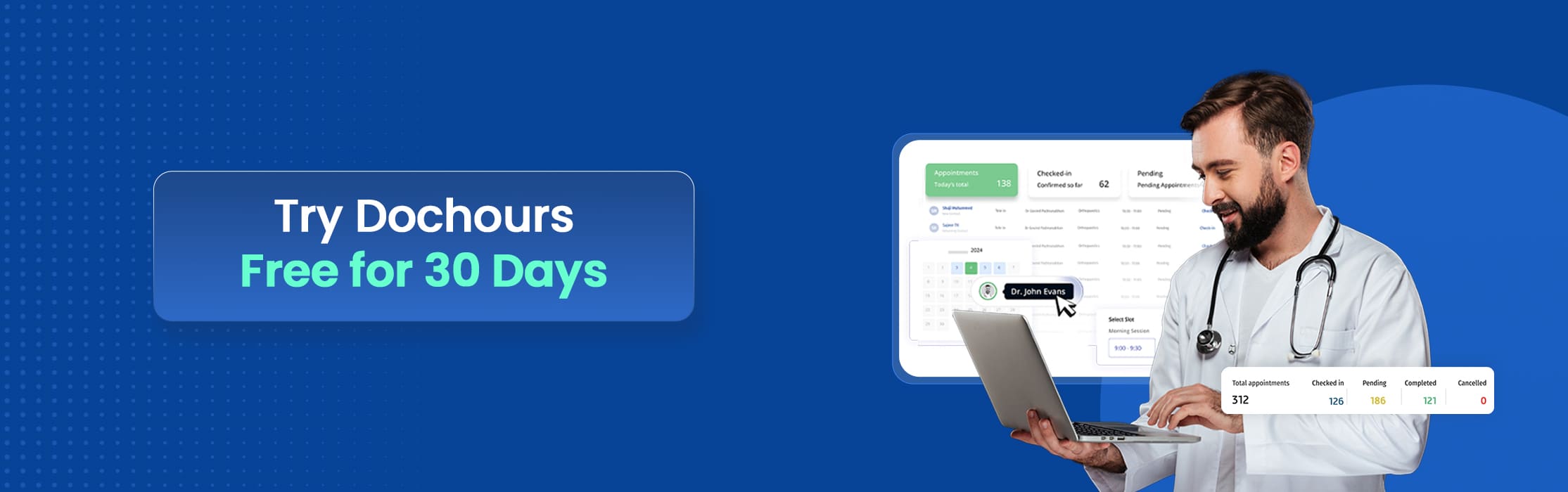
Ready to optimize your clinic operations and enhance patient experience? Explore Dochours, the all-in-one clinic management software — free for 30 days.
Final Thoughts
WhatsApp for healthcare is no longer just a messaging tool it’s a game-changer in how clinics communicate, engage and care for their patients. When used the right way, it improves response times, enhances patient satisfaction, and brings structure to your clinic’s communication flow.
By integrating WhatsApp Business for healthcare into a comprehensive platform like Dochours, clinics can automate messages, maintain privacy, and deliver a seamless experience from appointment booking to post-visit follow-ups.
In a world where digital convenience drives patient expectations, embracing smart tools like WhatsApp isn’t just helpful it’s essential.

